Knowing where to hang wall clock in living room can make a surprisingly big difference to the look and feel of your home. A wall clock isn’t only a practical timekeeping accessory. When positioned correctly, it can become a focal point, fill an empty wall, complement your furniture, and bring the entire room together.
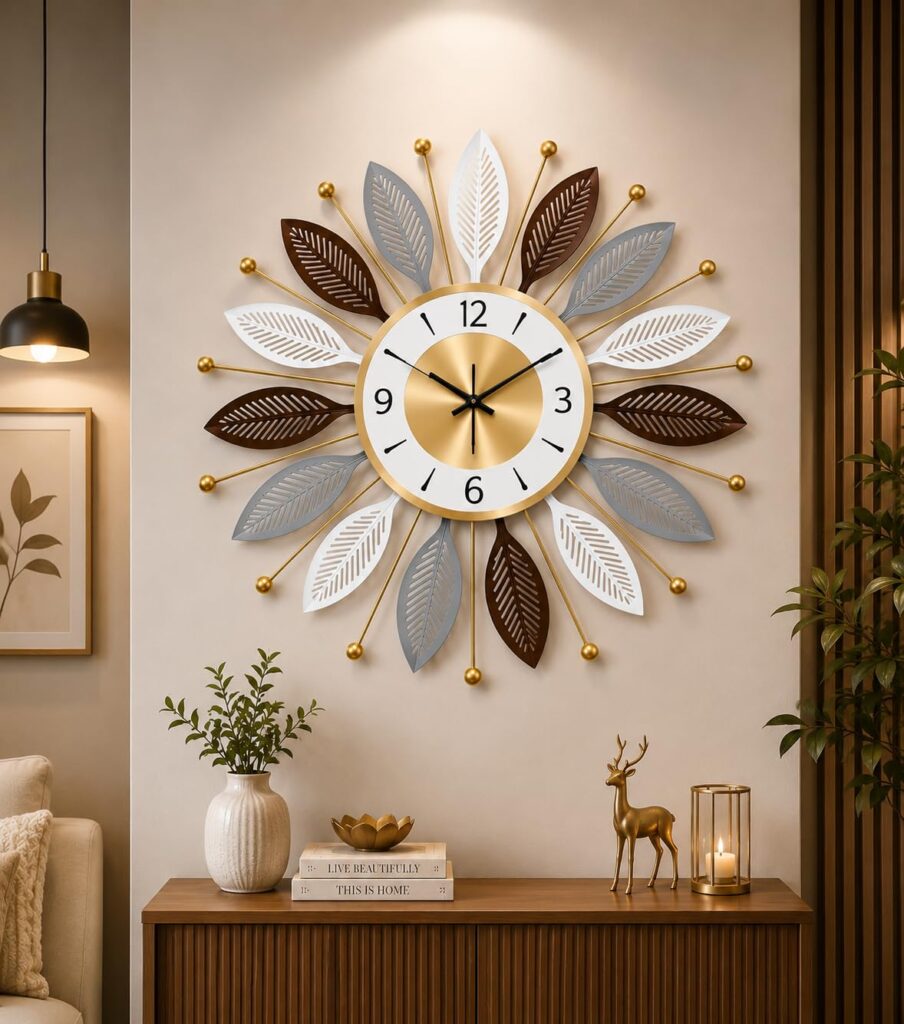
On the other hand, even a beautiful clock can look awkward when it’s too high, too low, too small, or surrounded by too much decoration.
The good news? You don’t need to be an interior designer to get the placement right.
Whether you have a compact apartment, a spacious family room, a modern living area, or a traditional Indian home, there are several smart ways to position a clock. The trick is to consider visibility, wall space, furniture, clock size, viewing height, and overall room balance before drilling that first hole.
In this guide, we’ll explore 10 practical wall clock placement ideas, along with height recommendations, styling tips, Vastu considerations, and mistakes to avoid.
Comprehensive Outline
Quick Answer: Where Is the Best Place for a Living Room Wall Clock?
For most living rooms, the best location is a clear, highly visible wall where the clock can be easily seen from the main seating area.
Common choices include:
- Above the sofa
- Opposite the main seating area
- Above a console table
- On a large accent wall
- Above or beside a fireplace
- Near the entrance
- As part of a gallery wall
- Beside a TV unit
- Between architectural features
- On a large empty wall
As a general starting point, the center of the clock can be positioned around 145–152 cm (57–60 inches) from the floor, then adjusted according to your furniture, ceiling height, and viewing position.
Why Wall Clock Placement Matters
A wall clock occupies a visible area of your living room, so its position affects more than just convenience.
First, visibility matters. If you’re sitting on the sofa, you should ideally be able to glance at the clock without twisting around or standing up.
Second, there’s visual balance. Furniture, artwork, lighting, curtains, shelves, and wall decor all contribute to the room’s composition. A clock should work with those elements rather than compete with them.
Third, there’s scale. A small clock can disappear on a huge wall, while an oversized clock may overwhelm a narrow section.
Finally, there’s personal style. A wooden clock may suit a warm traditional room, while a minimalist metal or frameless clock can work beautifully in a contemporary space.
Interior-design guidance commonly recommends choosing a location where the clock is both useful and visually connected to surrounding furniture.
10 Powerful Ideas for Where to Hang Wall Clock in Living Room
1. Hang the Clock Above the Sofa
The wall above the sofa is one of the most popular locations for a living room wall clock.
It works because the sofa is usually one of the largest pieces of furniture in the room. Placing a clock above it creates a natural visual relationship between the furniture and the wall decor.
For the best appearance, try to center the clock with the sofa rather than simply placing it in the middle of the entire wall.
Best for:
- Large living rooms
- Statement clocks
- Wooden wall clocks
- Decorative clocks
- Traditional interiors
Don’t push the clock too close to the ceiling. It should feel connected to the sofa below it.
For a large statement clock, keep the surrounding wall relatively uncluttered. This allows the clock to become the star of the show.
2. Place It Opposite the Main Seating Area
If your main priority is functionality, placing the clock opposite the sofa is an excellent choice.
You’ll be able to check the time while relaxing, watching television, talking with family, or entertaining guests.
This position is particularly useful when the wall behind the sofa is already filled with artwork or family photographs.
Before installing it, sit in your usual position and look toward the wall. Can you easily read the numbers? Is there glare from a window? Does the clock disappear into the background?
If the answer is yes to the first question and no to the others, you’ve probably found a winner.
3. Hang It Above a Console Table
A console table creates a natural visual base for a wall clock.
This arrangement works particularly well in living rooms with an entry-style console, sideboard, or narrow cabinet.
You can create a simple arrangement with:
- One wall clock
- A console table
- A small plant
- One or two decorative objects
- A table lamp
However, don’t overcrowd the area. The clock should remain the dominant wall element.
Leave enough breathing room between the furniture and clock so the two pieces look connected without appearing cramped.
4. Use an Accent Wall
Have a blank wall painted in a contrasting color? That’s a fantastic opportunity for a wall clock.
A clock can become the focal point against:
- Dark green walls
- Navy blue walls
- Charcoal walls
- Beige walls
- Textured walls
- Wood-panel walls
- Decorative wallpaper
Contrast is especially important when choosing a clock.
For example, a black clock can stand out beautifully against a light wall, while a gold or wooden clock can add warmth to a darker background.
The key is to avoid excessive decoration around the clock. Let the accent wall do some of the visual work.
5. Place It Above a Fireplace or Mantel
If your living room has a fireplace, the space above the mantel can provide a naturally centered location.
This arrangement works especially well with:
- Traditional wall clocks
- Vintage clocks
- Wooden clocks
- Roman numeral clocks
- Large decorative clocks
A fireplace already acts as a focal point, so choose a clock that complements it rather than competing with it.
For example, a heavily decorated fireplace may look better with a relatively simple clock.
Likewise, a minimalist fireplace can support a more dramatic statement clock.
6. Hang It Near the Living Room Entrance
The entrance wall is another practical option.
A clock placed near the entrance can be one of the first decorative elements people notice when entering the room. It also gives you an easy opportunity to check the time while coming or going.
This location works particularly well when the main living room walls are occupied by:
- A TV
- Artwork
- Windows
- Shelves
- Furniture
- Large mirrors
Instead of forcing a clock into a crowded wall, use an otherwise overlooked section near the entrance.
7. Place It Beside the TV Unit
Many modern living rooms have a large TV unit that dominates one wall.
While hanging a clock directly above the television may create visual competition, placing the clock on an adjacent section of the wall can work better.
Think of the clock and TV as separate visual elements.
A simple clock positioned beside the TV unit can provide balance without making the entertainment wall feel overloaded.
This is especially useful if your TV wall already contains decorative panels, shelves, speakers, or lighting.
8. Make the Clock Part of a Gallery Wall
Who says a wall clock has to stand alone?
You can incorporate it into a gallery wall with:
- Family photographs
- Artwork
- Mirrors
- Decorative prints
- Small wall shelves
- Botanical artwork
The clock can act as the central or largest element.
However, gallery walls require planning. Don’t simply hammer several nails into the wall and hope everything works out.
Lay the arrangement on the floor first. Try different combinations until the spacing looks balanced.
Then transfer the arrangement to the wall.
This approach works particularly well for eclectic, contemporary, and family-oriented living rooms.
9. Place It Between Architectural Features
Sometimes the best clock location isn’t an obvious furniture wall.
Look for spaces between:
- Two windows
- Two doors
- Wall panels
- Columns
- Built-in shelves
- Decorative niches
If you have a narrow section of wall that’s currently unused, a clock can fill the space beautifully.
The important thing is proportion.
A very large clock may make a narrow section feel cramped, while a small clock may look lost.
Choose the clock size according to the width and height of the available area.
10. Use a Large Empty Wall as a Statement Area
If your living room has a large blank wall, don’t be afraid to make the clock the centerpiece.
A large wall clock can add personality without requiring lots of additional decoration.
This is particularly effective with oversized:
- Metal clocks
- Wooden clocks
- Industrial clocks
- Minimalist clocks
- Decorative Roman numeral clocks
A statement clock can be especially useful when you want to create a focal point without covering the entire wall with artwork.
The basic principle is simple: the larger the wall, the more carefully you should consider scale.
How High Should You Hang a Wall Clock?
Height is one of the biggest factors that determines whether a wall clock looks right.
A practical starting point is to position the center of the clock around 145–152 cm (57–60 inches) above the finished floor. However, this isn’t a rigid rule. Your furniture, ceiling height, clock dimensions, and typical viewing position should influence the final height.
If you’re hanging the clock above furniture, use the furniture as a visual reference rather than blindly following a floor measurement.
For example:
| Placement | Practical Approach |
| Open wall | Center around comfortable eye level |
| Above sofa | Keep a balanced gap above the sofa |
| Above console | Maintain clear breathing room |
| Above fireplace | Center within the fireplace composition |
| Gallery wall | Match the clock to the overall arrangement |
| High ceiling | Adjust upward if necessary |
A Simple Height Test
Before drilling:
- Hold the clock at the planned height.
- Sit on your main sofa.
- Look at the clock.
- Check whether it’s comfortable to read.
- Step back and view the entire wall.
- Adjust if it looks too high or too low.
This simple test can save you from unnecessary holes in the wall.
How to Choose the Right Wall Clock Size
Clock size should relate to the wall and furniture around it.
A small clock on a massive wall may look insignificant. Conversely, an oversized clock squeezed between two pieces of furniture can feel overwhelming.
Consider the available wall space first.
Small Clocks
Small clocks can work well in:
- Compact apartments
- Narrow walls
- Gallery arrangements
- Small living rooms
- Areas with lots of existing decor
Medium Clocks
Medium-sized clocks are versatile and usually easy to incorporate into different living room styles.
They’re suitable for:
- Above consoles
- Medium-sized walls
- Apartment living rooms
- Simple feature walls
Large Clocks
Large clocks are best when you want the clock to become a major decorative feature.
They’re especially suitable for:
- Large blank walls
- Spacious living rooms
- Above large sofas
- Minimalist interiors
The goal isn’t to choose the biggest clock you can find. It’s to choose one that looks proportional to its surroundings.
Match the Clock With Your Living Room Style
Your clock doesn’t exist in isolation. It should complement the room’s overall design.
Modern Living Room
Choose clean designs with simple numbers, slim frames, metal finishes, or minimalist faces.
Traditional Living Room
Wooden frames, classic numerals, ornate details, and vintage-inspired designs can work beautifully.
Minimalist Living Room
Choose a simple clock with limited visual details. Leave plenty of empty wall space around it.
Rustic Living Room
Wood, distressed finishes, natural textures, and earthy colors can complement rustic furniture.
Luxury Living Room
Metallic finishes, elegant designs, oversized clocks, and sophisticated detailing can create a premium appearance.
Should You Follow Vastu for Wall Clock Placement?
If Vastu is important to your household, you may also consider traditional Vastu guidance when deciding where to place your clock.
Some Vastu sources commonly recommend directions such as north or east for wall clocks, while specific recommendations can vary.
However, Vastu is a traditional belief system rather than a scientifically established method for determining interior design outcomes.
So, if you follow Vastu, you can consider those preferences alongside practical factors such as:
- Visibility
- Wall space
- Height
- Safety
- Furniture arrangement
- Natural lighting
- Overall appearance
There’s no need to sacrifice a practical and attractive layout simply because one particular wall isn’t convenient.
7 Common Wall Clock Placement Mistakes
Even a beautiful clock can look wrong if the placement isn’t carefully considered.
Hanging It Too High
A clock that’s almost touching the ceiling can look disconnected from the furniture.
Hanging It Too Low
If it’s too close to the sofa, console, or other furniture, the wall can feel crowded.
Choosing the Wrong Size
A tiny clock on a huge wall may disappear visually.
Placing It in Direct Glare
Sunlight or strong artificial lighting can make the clock face difficult to read.
Crowding It With Decor
Too many frames, shelves, plants, and decorative pieces can make the wall look chaotic.
Ignoring the Viewing Angle
A clock may look fantastic from the entrance but be almost impossible to read from the sofa.
Hanging It Without Measuring
Eyeballing the position can sometimes work, but measuring first is safer and usually produces a cleaner result.
How to Create a Balanced Wall Clock Arrangement
Think of the clock as part of a composition rather than an isolated object.
Ask yourself:
What is the visual anchor of this wall?
If it’s the sofa, center the clock around the sofa.
If it’s a fireplace, center the clock around the fireplace.
If it’s a console, use the console as your reference.
If it’s an empty accent wall, let the clock become the focal point.
This simple approach makes the room feel more intentional.
For more inspiration on practical clock placement, you can also explore this wall clock placement guide.
Quick Wall Clock Hanging Checklist
Before making the final installation, check the following:
- Is the clock easy to see from the sofa?
- Is the clock at a comfortable viewing height?
- Does its size match the wall?
- Does it complement the furniture?
- Is there enough empty space around it?
- Is the clock face protected from strong glare?
- Does the color work with the room?
- Is the wall suitable for the mounting hardware?
- Will doors, curtains, or furniture interfere with it?
- Does the overall arrangement look balanced from a distance?
If you can answer yes to most of these questions, you’re on the right track.
Frequently Asked Questions
1. Where is the best place to hang a wall clock in a living room?
The best place is usually a visible wall where the clock can be easily read from the main seating area. Above a sofa, opposite the sofa, above a console, or on a clear accent wall are popular options.
2. How high should a wall clock be in the living room?
A useful starting point is to place the center of the clock around 145–152 cm (57–60 inches) from the floor. Adjust this based on your furniture, ceiling height, clock size, and viewing position.
3. Can I hang a wall clock above my sofa?
Yes. Above the sofa is one of the most common wall clock placements. Center the clock with the sofa and maintain enough space between the clock and the sofa so the arrangement doesn’t look cramped.
4. Should a wall clock be above the TV?
It can be, but it’s often better to avoid creating visual competition with a large television. An adjacent wall or nearby section can provide a cleaner solution.
5. What size wall clock is best for a living room?
The ideal size depends on the wall and furniture. Small clocks suit compact spaces, medium clocks are versatile, and large clocks work well as statement pieces on spacious walls.
6. Is the north direction good for a wall clock according to Vastu?
Traditional Vastu guidance commonly considers the north direction favorable for a wall clock, with east and other directions also mentioned in some sources. These are traditional beliefs rather than scientifically proven rules.
7. Can a wall clock be part of a gallery wall?
Absolutely. A clock can work as the central piece of a gallery wall surrounded by photographs, artwork, mirrors, or decorative prints. Just plan the arrangement and spacing before mounting everything.
8. Should the wall clock match my furniture?
It doesn’t have to match exactly, but it should complement the room. For example, a wooden clock can work well with natural furniture, while metallic finishes can complement modern interiors.
9. Is it okay to put a large clock on a blank wall?
Yes. A large blank wall can be an excellent location for an oversized statement clock. Just make sure the clock is proportional to the wall and has enough surrounding space.
10. Should I choose a decorative or simple wall clock?
That depends on your room. If your living room already contains lots of decoration, a simple clock may work better. If the wall is plain, a decorative or oversized clock can create a strong focal point.
Conclusion
Finding where to hang wall clock in living room doesn’t have to be complicated.
The best placement combines three things: function, proportion, and style.
Start by identifying the wall that’s easiest to see from your main seating area. Then consider whether the clock should sit above a sofa, console, fireplace, accent wall, or another architectural feature. From there, choose a suitable size and position it at a comfortable height.
Don’t forget to step back and look at the entire room before making the final decision.
Most importantly, don’t feel restricted by a single rule. A measurement is a useful starting point, but your room’s furniture, layout, ceiling height, and personal taste should have the final say.
When everything comes together, the right wall clock can do more than tell time—it can make your living room feel more balanced, complete, and inviting.
Final Tip
Choose the wall you naturally look at, choose a clock that fits the space, and hang it where it feels connected to the furniture.
That’s the simplest formula for creating a stylish and functional living room wall clock arrangement.
1 Comment
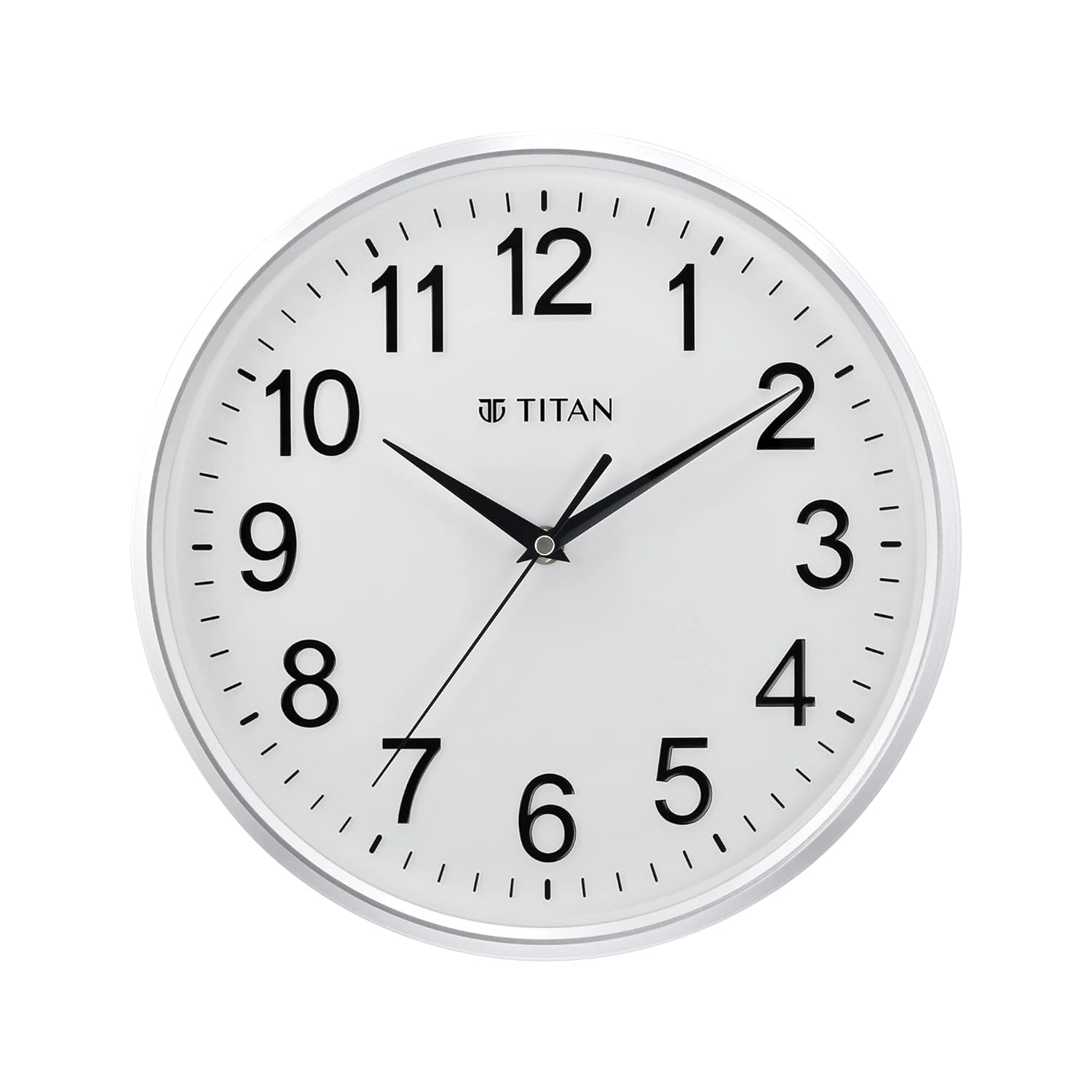
14 Best Titan Wall Clocks for Living Room - Clocks Aura · September 3, 2026 at 4:01 am
[…] Titan Wall Clock can complement living rooms, bedrooms, kitchens, classrooms, kids’ rooms, dining areas, and study […]