When shopping for a wall clock, mantel clock, or decorative timepiece, you’ll often encounter two major movement types: quartz clocks and mechanical clocks.
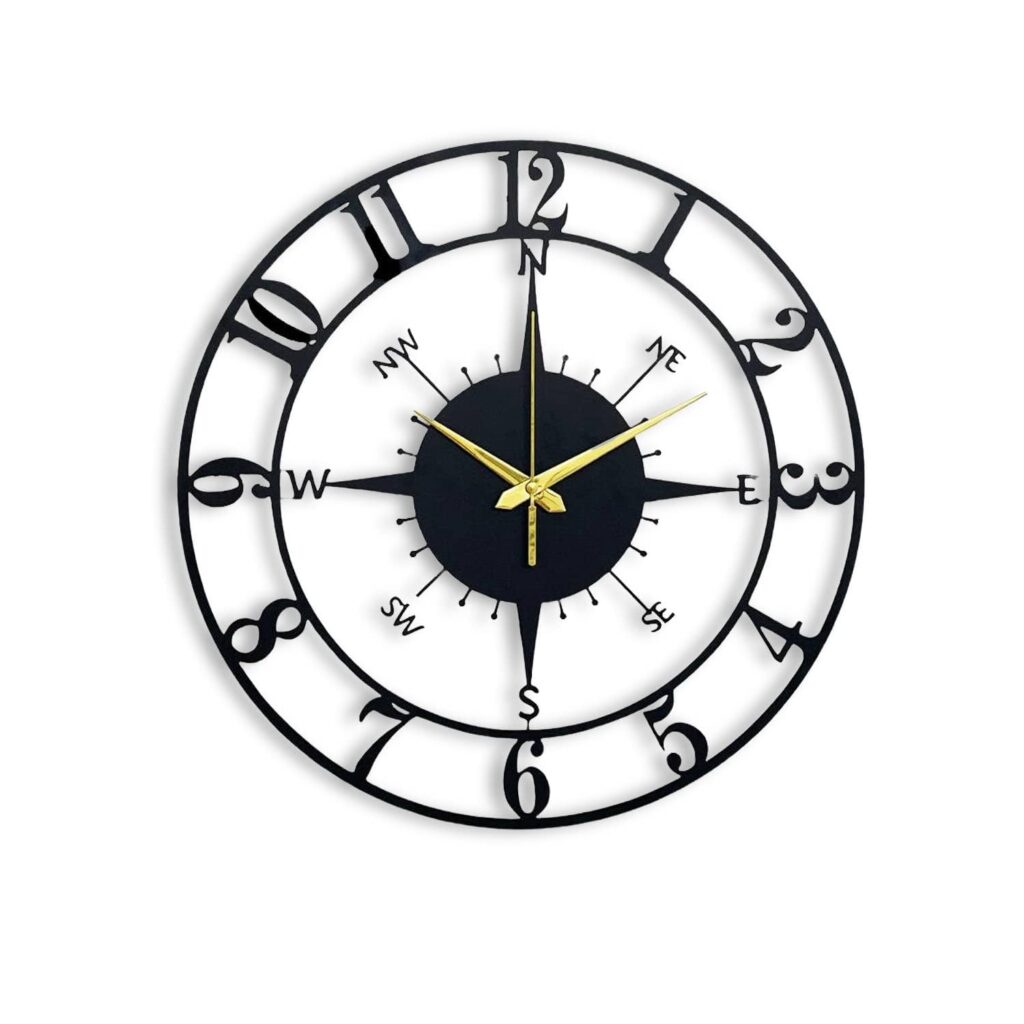
Although both tell time, they operate in completely different ways. Quartz clocks rely on electronic components and batteries, while mechanical clocks use springs, gears, and intricate engineering.
Understanding the difference between a quartz vs mechanical clock can help you choose the right clock for your home, office, or collection. In this guide, we’ll explain exactly how each type works and compare their strengths and weaknesses.
Comprehensive Outline
What Is a Quartz Clock?
A quartz clock is a timepiece powered by a battery and regulated by a quartz crystal.
Quartz clocks became popular during the 1970s because they offered greater accuracy, lower maintenance, and affordable pricing compared to traditional mechanical clocks.
Today, most modern wall clocks use quartz movements because they are reliable and easy to maintain.
How a Quartz Clock Works
The operation of a quartz clock involves several simple but highly precise steps:
Step 1: Battery Supplies Power
The battery sends electrical energy to the clock’s circuit board.
Step 2: Quartz Crystal Vibrates
Inside the movement is a tiny quartz crystal.
When electricity passes through it, the crystal vibrates at a very precise frequency of 32,768 times per second.
Step 3: Electronic Circuit Counts Vibrations
The clock’s electronic circuit counts these vibrations and converts them into one-second intervals.
Step 4: Motor Moves the Clock Hands
A small motor receives the signal and moves the gears.
The gears then move:
- Hour hand
- Minute hand
- Second hand
Step 5: Accurate Time Display
Because quartz crystals vibrate at a consistent frequency, quartz clocks remain extremely accurate.
Main Components of a Quartz Clock
| Component | Function |
| Battery | Provides power |
| Quartz Crystal | Maintains timing accuracy |
| Circuit Board | Processes signals |
| Motor | Drives movement |
| Gear Train | Moves clock hands |
What Is a Mechanical Clock?
A mechanical clock operates entirely through mechanical parts rather than electronic components.
These clocks have been used for centuries and are admired for their craftsmanship and engineering.
Mechanical clocks are commonly found in:
- Grandfather clocks
- Mantel clocks
- Antique clocks
- Luxury decorative clocks
How a Mechanical Clock Works
Mechanical clocks use stored energy instead of batteries.
Step 1: Energy Storage
Energy is stored through:
- Winding a spring
- Raising weights
Step 2: Main Spring Releases Energy
The wound spring slowly releases energy over time.
This energy powers the entire clock mechanism.
Step 3: Gear Train Transfers Motion
A series of gears distributes the energy throughout the movement.
Step 4: Escapement Controls Speed
The escapement mechanism regulates energy release.
Without it, the gears would spin uncontrollably.
Step 5: Pendulum or Balance Wheel Maintains Timing
Many mechanical clocks use:
- Pendulums
- Balance wheels
These components ensure consistent timekeeping.
Step 6: Hands Display Time
The regulated gear movement rotates the hands around the dial.
Main Components of a Mechanical Clock
| Component | Function |
| Main Spring | Stores energy |
| Gear Train | Transfers power |
| Escapement | Controls movement |
| Pendulum/Balance Wheel | Maintains timing |
| Clock Hands | Display time |
Quartz vs Mechanical Clock: Quick Comparison
| Feature | Quartz Clock | Mechanical Clock |
| Power Source | Battery | Spring or Weights |
| Accuracy | Very High | Moderate |
| Maintenance | Low | High |
| Cost | Affordable | Usually Higher |
| Winding Required | No | Yes |
| Noise Level | Usually Quiet | Often Audible |
| Lifespan | Long | Very Long with Care |
| Complexity | Simple | Complex |
| Popularity | Very High | Niche Market |
| Best For | Everyday Use | Collectors & Decor |
10 Key Differences Between Quartz and Mechanical Clocks
1. Accuracy
Quartz clock are significantly more accurate.
A quality quartz clock may vary only a few seconds per month.
Mechanical clocks can gain or lose several minutes over time.
2. Power Source
Quartz clock use batteries.
Mechanical clocks depend on wound springs or weights.
3. Maintenance
Quartz clocks require little maintenance beyond battery replacement.
Mechanical clock need periodic servicing and lubrication.
4. Cost
Quartz clocks are generally less expensive.
Mechanical clocks often cost more due to their intricate construction.
5. Ease of Use
Quartz clocks are easier to operate.
Simply insert a battery and set the time.
Mechanical clock require regular winding.
6. Noise
Quartz clocks are often silent, especially silent sweep models.
Mechanical clocks may produce ticking sounds.
7. Durability
Both can last many years.
However, mechanical clocks may require professional repairs over time.
8. Design Appeal
Mechanical clocks often showcase traditional craftsmanship.
Quartz clocks prioritize practicality and affordability.
9. Technology
Quartz clocks rely on electronics.
Mechanical clocks rely entirely on gears and springs.
10. Collectibility
Mechanical clocks are generally more collectible and valuable.
Antique mechanical clock can become prized heirlooms.
Advantages of Quartz Clocks
Exceptional Accuracy
Quartz technology provides highly precise timekeeping.
Affordable Pricing
Most quartz wall clock are budget-friendly.
Low Maintenance
Battery replacement is usually the only maintenance required.
Wide Availability
Quartz movements are found in countless clock styles.
Silent Sweep Options
Many modern quartz clock feature silent sweep technology for noise-free operation.
Advantages of Mechanical Clocks
Traditional Craftsmanship
Mechanical clock showcase centuries of engineering expertise.
No Batteries Required
Operation depends entirely on mechanical energy.
Decorative Appeal
Many mechanical clock become focal points within a room.
Collector Value
High-quality mechanical clocks often appreciate in value.
Long-Term Longevity
Properly maintained mechanical clocks can function for generations.
Which Clock Is Better for Home Use?
For most homeowners, quartz clock are the better choice.
Reasons include:
- Greater accuracy
- Lower cost
- Easier maintenance
- Silent operation
- Wide variety of designs
Mechanical clocks are best suited for:
- Collectors
- Antique enthusiasts
- Traditional interiors
- Luxury decor settings
If your goal is reliable everyday timekeeping, a quartz wall clock is usually the ideal option.
Common Myths About Quartz and Mechanical Clocks
Myth 1: Mechanical Clocks Are More Accurate
False.
Quartz clocks are generally far more accurate.
Myth 2: Quartz Clock Are Cheaply Made
Not always.
Many premium wall clocks use high-quality quartz movements.
Myth 3: Mechanical Clocks Never Need Service
False.
Mechanical movements require regular maintenance.
Myth 4: Quartz Clock Have Short Lifespans
A quality quartz clock can last for decades with proper care.
Myth 5: Mechanical Clocks Are Obsolete
Far from it.
Many enthusiasts value them for their craftsmanship and heritage.
Frequently Asked Questions
1. What is the main difference between quartz and mechanical clocks?
Quartz clocks use batteries and quartz crystals, while mechanical clocks use springs, gears, and escapements.
2. Which clock is more accurate?
Quartz clocks are significantly more accurate than mechanical clocks.
3. Do mechanical clocks require batteries?
No. Mechanical clocks operate using wound springs or weights.
4. Why do quartz clocks use quartz crystals?
Quartz crystals vibrate at a highly consistent frequency, making them excellent time regulators.
5. Which clock requires more maintenance?
Mechanical clocks require more maintenance because they contain many moving parts.
6. Are quartz clocks cheaper?
Generally, yes. Quartz clocks are more affordable than mechanical clocks.
7. How long does a quartz clock last?
Many quartz clocks can operate reliably for decades with occasional battery replacement.
8. Are mechanical clocks worth buying?
Yes, especially if you appreciate craftsmanship, tradition, and collectible timepieces.
Conclusion
The quartz vs mechanical clock debate comes down to practicality versus craftsmanship. Quartz clocks dominate modern homes because they are accurate, affordable, and easy to maintain. Their battery-powered movements and quartz crystal technology make them reliable everyday timekeepers.
Mechanical clocks, meanwhile, represent the artistry and engineering of traditional clockmaking. While they require more maintenance and attention, they offer timeless beauty and historical appeal that many enthusiasts appreciate.
For most households, a quartz wall clock is the best option. However, if you value heritage, intricate mechanics, and collectible craftsmanship, a mechanical clock can be a rewarding addition to your home.
3 Comments
14 Best Titan Wall Clocks for Living Room - Clocks Aura · September 3, 2026 at 4:03 am
[…] Titan Wall Clock uses a smooth, non-ticking mechanism to provide quiet operation, making it suitable for peaceful […]
Top 14 Best Ajanta Wall Clocks to Buy today - Clocks Aura · September 4, 2026 at 3:55 am
[…] quartz mechanism is designed to provide dependable everyday timekeeping without requiring a direct electrical […]
Silent vs Ticking Clocks – Which Is Better? - Clocks Aura · September 4, 2026 at 2:33 pm
[…] High-quality sweep movements can sometimes cost more than basic clock mechanisms. […]
Comments are closed.