Silent vs Ticking Clocks: Quick Answer
Silent vs ticking clocks is a common question when choosing a wall clock for your home or office. The main difference is simple: a silent clock is designed to operate with little or no noticeable ticking sound, while a traditional ticking clock produces an audible tick as its second hand moves.
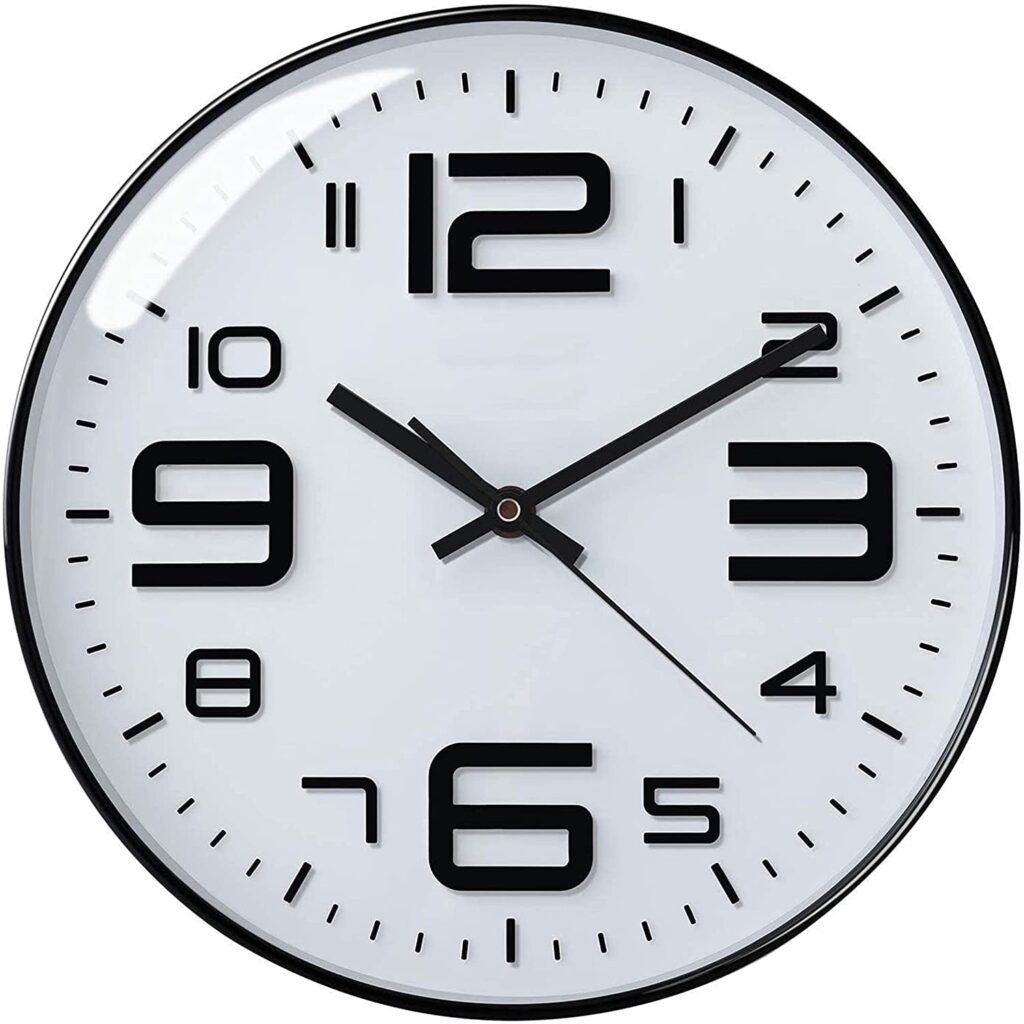
For most bedrooms, study rooms, offices, and quiet spaces, silent clocks are usually the better choice. They create a calmer environment and don’t produce a repetitive sound in the background.
However, ticking clocks still have their place. Some people actually like the traditional sound because it makes a room feel more classic and familiar. Ticking models can also be perfectly suitable for kitchens, living rooms, workshops, classrooms, or other areas where a little background noise isn’t a problem.
The right choice ultimately depends on where you’re going to place the clock and how sensitive you are to sound.
If you’re buying a clock mainly for decoration and timekeeping, both types can work well. If you’re easily distracted by repetitive sounds, though, going silent is a no-brainer.
Article Overview
What Is a Silent Clock?
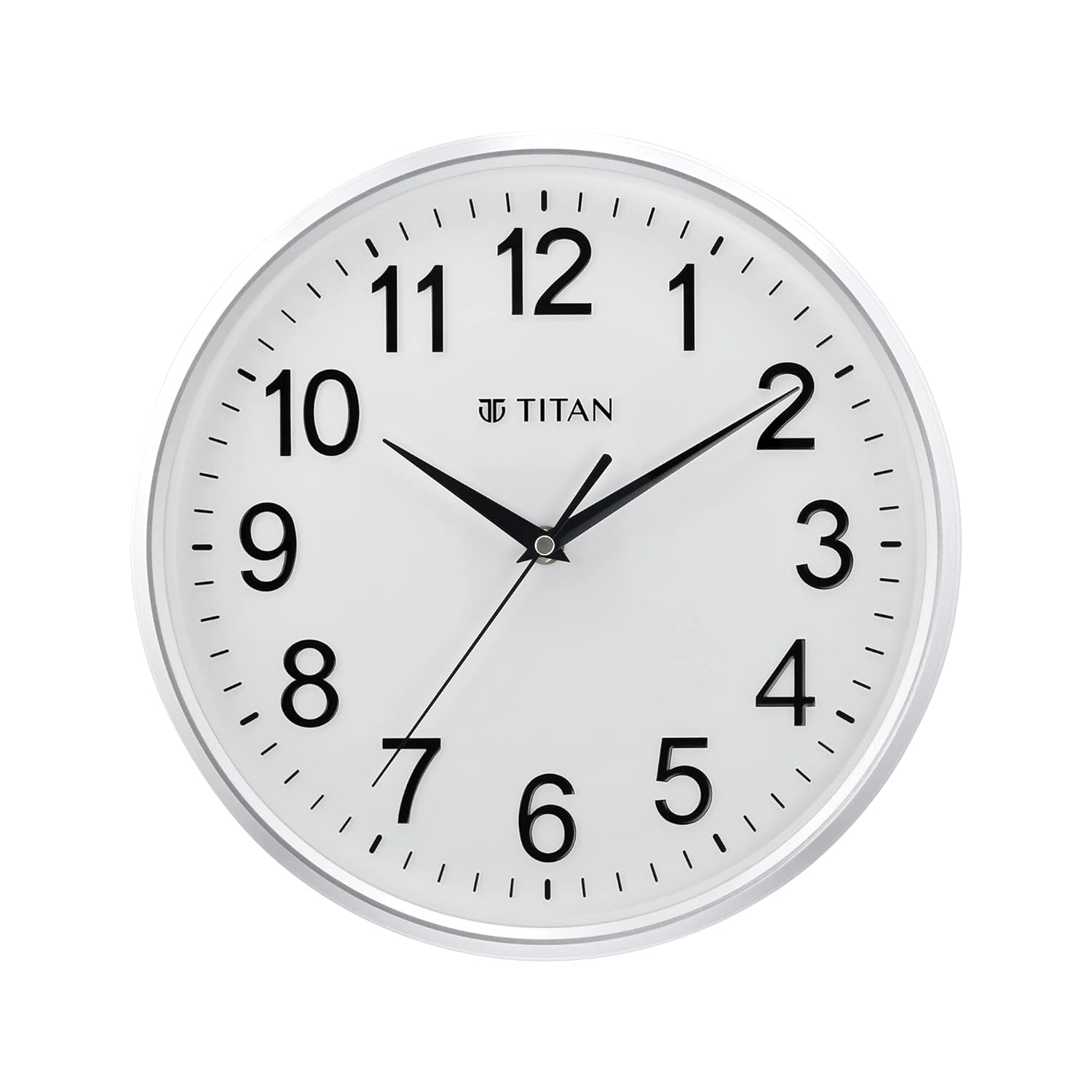
A silent clock is a wall clock designed to minimize the traditional ticking sound produced by its movement. Many modern silent clocks use a sweeping second hand mechanism, which moves smoothly around the dial rather than jumping once every second.
This movement is often called a silent sweep movement or continuous sweep movement.
The word “silent” doesn’t always mean the clock makes absolutely zero sound. Depending on the quality of the movement, you might hear a very faint mechanical sound when you’re extremely close to it. However, from a normal distance, a good silent clock should be barely noticeable.
Silent wall clocks have become popular because people increasingly want quiet environments at home and work.
How Silent Clock Movements Work
Traditional quartz clocks often move their second hand in individual one-second steps. Each movement can create the familiar “tick” sound.
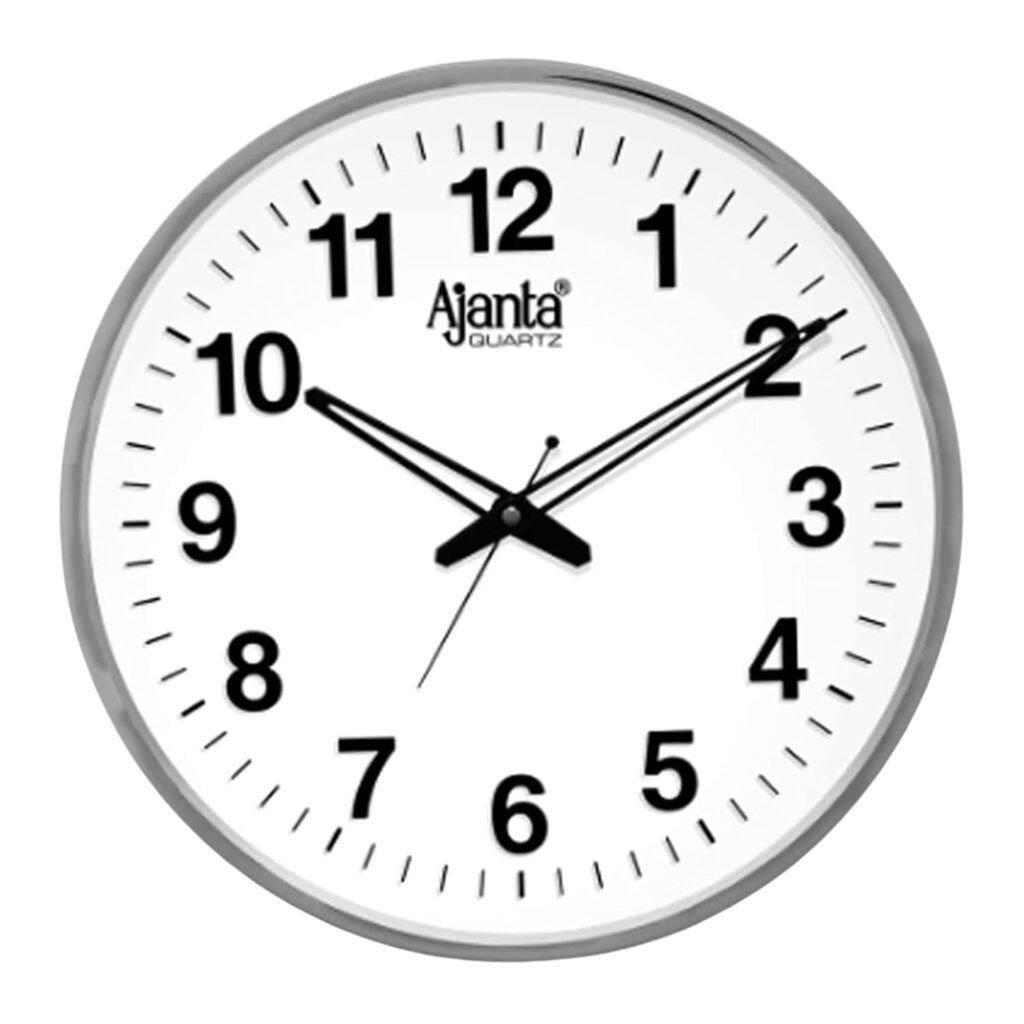
A silent sweep mechanism works differently. Instead of moving in noticeable one-second jumps, the second hand moves continuously or in very small increments.
This reduces the sharp ticking noise.
The quality of the movement matters, too. A cheap silent mechanism may still produce a faint hum or clicking sound. Therefore, it’s worth checking product specifications and customer feedback before buying.
Benefits of Silent Clocks
Silent clocks offer several practical advantages:
- Very low operating noise
- Better for bedrooms
- Suitable for study areas
- Comfortable for quiet offices
- Less distracting during work
- Good choice for reading rooms
- Modern and clean operation
- Available in many decorative designs
Another benefit is that silent clocks blend naturally into a room. You can still see the second hand moving, but you aren’t constantly reminded of its movement by a repetitive tick.
What Is a Ticking Clock?
A ticking clock uses a traditional clock movement where the second hand advances in individual steps. Each step can produce a recognizable ticking sound.
For many people, this sound is part of the charm of an analog clock.
Traditional ticking clocks are widely available and come in countless styles, from simple plastic wall clocks to large decorative designs.
The sound level can vary considerably. Some clocks have a loud, noticeable tick, while others are relatively quiet.
How Ticking Clock Movements Work
In a typical quartz clock, an electronic circuit controls the movement of the hands. The second hand usually advances once every second.
That movement can create a small mechanical sound.
When you’re sitting several feet away, the sound may be barely noticeable. However, in a quiet room, particularly at night, the ticking can become much more obvious.
That’s why the same clock can feel perfectly quiet in a busy living room but surprisingly loud in a bedroom.
Benefits of Ticking Clocks
Traditional ticking clocks still have some advantages:
- Classic clock experience
- Often affordable
- Easy to find
- Huge variety of designs
- Familiar mechanical sound
- Suitable for busy environments
- Good for traditional interiors
For some buyers, the ticking sound isn’t a disadvantage at all. In fact, it can provide a sense of rhythm and make the clock feel more traditional.
Silent vs Ticking Clocks: Key Differences
When comparing silent vs ticking clocks, noise is the biggest difference, but it isn’t the only factor.
The best option depends on several things, including room type, personal preference, clock design, movement quality, and how much you value a peaceful environment.
| Feature | Silent Clock | Ticking Clock |
| Noise | Very low | Noticeable ticking |
| Bedroom use | Excellent | Depends on sensitivity |
| Office use | Excellent | Good |
| Living room | Excellent | Excellent |
| Study room | Excellent | Fair to good |
| Traditional feel | Moderate | Excellent |
| Modern feel | Excellent | Good |
| Quiet environments | Excellent | Less suitable |
| Variety | Very high | Very high |
| Typical movement | Silent sweep | Step movement |
Noise Level
This is the biggest difference between the two.
Silent clocks are designed to keep operating noise to a minimum. They’re especially useful in rooms where background noise can become distracting.
Ticking clocks produce a repeated sound. In a busy room, you might not notice it. In a quiet room, however, it can become surprisingly prominent.
Accuracy and Movement
Both silent and ticking clocks can use quartz movements, so being silent doesn’t automatically mean a clock is more accurate.
Accuracy depends more on the quality of the movement and the clock’s construction.
A good silent clock can keep time just as reliably as a traditional ticking clock.
Bedroom Suitability
For bedrooms, silent clocks generally have the edge.
At night, background noise becomes much easier to notice. A ticking clock placed near your bed can become annoying if you’re sensitive to repetitive sounds.
A silent sweep clock avoids this issue and lets you focus on sleeping rather than listening to every second pass.
Office and Study Use
Silent clocks are also a strong choice for offices and study rooms.
When you’re working on something that requires concentration, even a small repetitive sound can become distracting.
A silent clock keeps the useful time display without adding unnecessary background noise.
Silent vs Ticking Clocks for Bedrooms
If you’re deciding between silent vs ticking clocks for a bedroom, a silent model is usually the safer choice.
Bedrooms tend to be quiet, particularly during the night. Because there are fewer competing sounds, ticking becomes more noticeable.
Imagine trying to fall asleep while hearing:
Tick… tick… tick… tick…
It may not bother everyone, but if you’re sensitive to repetitive sounds, it can become irritating.
A silent wall clock solves the problem while still giving you a convenient way to check the time.
For bedrooms, look for:
- Silent sweep movement
- Clear hour markers
- Easy-to-read hands
- Non-glare dial
- Appropriate clock size
- Reliable quartz movement
- Simple installation
Avoid choosing a clock based only on appearance. A beautiful clock that keeps you awake isn’t exactly a great bargain.
Silent vs Ticking Clocks for Offices
For an office, silent clocks are often the better option.
Modern workspaces are already filled with sounds from keyboards, phones, conversations, air conditioners, and other equipment. Adding a repetitive ticking sound isn’t necessary.
A silent clock can provide a professional and distraction-free experience.
It’s particularly useful in:
- Home offices
- Meeting rooms
- Libraries
- Reception areas
- Private offices
- Study spaces
- Examination rooms
That said, ticking clocks aren’t automatically bad for offices. If the room is already fairly noisy, the ticking may disappear into the background.
Silent vs Ticking Clocks for Living Rooms
The living room is where the decision becomes more subjective.
Living rooms are generally active spaces. People talk, watch television, listen to music, and move around. As a result, ticking usually isn’t a major concern.
A traditional ticking clock can even complement a classic interior.
However, silent clocks are equally suitable and may be preferable if your living room has a minimalist or modern design.
When choosing a living room wall clock, consider the overall appearance as much as the movement.
A large decorative clock can become a focal point, while a smaller minimalist model can blend into the wall.
Silent vs Ticking Clocks for Children
A silent clock can be useful in a child’s bedroom or study area.
Children need a comfortable environment for sleeping and studying, and unnecessary repetitive noise can sometimes become distracting.
A colorful silent clock can also help children learn to read analog time without introducing extra background noise.
For children’s rooms, prioritize:
- Easy-to-read numbers
- Durable construction
- Safe wall mounting
- Quiet movement
- Appropriate size
- Attractive design
The clock should be easy to read from the child’s normal viewing position.
Silent Clock Advantages and Disadvantages
Silent clocks have many advantages, but they’re not perfect for every buyer.
Advantages
1. Quiet operation
The biggest benefit is obvious: little or no noticeable ticking.
2. Excellent for bedrooms
They help maintain a peaceful nighttime environment.
3. Good for focused work
Silent operation is useful when concentration matters.
4. Modern feel
Many silent clocks use contemporary designs that work well with modern interiors.
5. Versatile placement
You can use them in bedrooms, offices, studies, living rooms, and other quiet spaces.
Disadvantages
1. Quality varies
Not every product advertised as silent is completely silent.
2. Some models cost more
High-quality sweep movements can sometimes cost more than basic clock mechanisms.
3. Fewer traditional sounds
If you love the classic tick-tock experience, a silent clock won’t provide it.
Ticking Clock Advantages and Disadvantages
Traditional ticking clocks also deserve consideration.
Advantages
- Classic appearance
- Familiar ticking sound
- Often affordable
- Many design choices
- Easy to find
- Suitable for active rooms
Some people find ticking clocks comforting. The repetitive sound can create a traditional atmosphere that reminds them of older analog clocks.
Disadvantages
The main disadvantage is noise.
In a quiet environment, the ticking can become distracting. This is especially true when the clock is mounted near a bed or desk.
Another issue is that you can’t easily predict how loud a clock will sound from its appearance alone. Two clocks with similar designs may have very different movement noise.
Which Clock Is Better for You?
The answer depends mainly on where you’ll use it.
Choose a silent clock if:
- You’re buying for a bedroom.
- You work from home.
- You study for long periods.
- You’re sensitive to repetitive sounds.
- You want a peaceful room.
- You’re furnishing a modern office.
- You want smooth second-hand movement.
Choose a ticking clock if:
- You enjoy traditional clock sounds.
- You’re buying for a busy living room.
- Noise isn’t a concern.
- You prefer classic clock designs.
- You’re looking for a simple, affordable option.
If you’re still unsure, silent is generally the safer all-round choice. You can always enjoy the visual design of an analog clock without having to listen to it.
Important Features to Check Before Buying
Don’t stop at the words “silent” or “non-ticking.” There are several other features worth checking.
1. Movement Type
Look for terms such as silent sweep, continuous sweep, or non-ticking movement.
2. Clock Size
A clock should be large enough to read from across the room.
For a large living room wall, a tiny clock may disappear visually. On the other hand, an oversized clock can overwhelm a small bedroom.
3. Dial Readability
Clear numbers and contrasting hands make the clock easier to read.
Avoid overly decorative dials if quick time reading is important.
4. Build Quality
Check the materials used for the frame, dial, hands, and clock mechanism.
A strong frame can improve durability and appearance.
5. Power Source
Most wall clocks use AA batteries, although some designs may use other power options.
Battery life is worth considering if you don’t want to replace batteries frequently.
6. Wall Mounting
Check how the clock attaches to the wall.
A secure mounting point is especially important for large or heavy clocks.
7. Design
A clock is both a practical item and a decorative piece.
Consider whether its color, shape, and style match your existing furniture and wall decor.
How to Choose a Silent Clock That Actually Stays Quiet
If you’re specifically shopping for a silent clock, don’t rely entirely on marketing language.
First, check the product specifications for the movement type. Then, look through customer feedback for comments about noise.
Pay particular attention to reviews mentioning:
- Ticking
- Motor noise
- Clicking
- Nighttime use
- Bedroom use
- Sweep movement
A clock may be advertised as “silent” but still produce a faint motor sound. That’s why real-world feedback can be useful.
Also, remember that noise perception is personal. What one person calls silent might be noticeable to another.
Can a Silent Clock Be Completely Silent?
Not necessarily.
“Silent” usually means the clock doesn’t produce the obvious ticking noise associated with traditional step movements.
A high-quality silent sweep clock can be extremely quiet, but you may still hear a faint mechanical or motor sound if you place your ear very close to it.
From normal room distance, however, a good silent clock should be unobtrusive.
Are Silent Clocks More Accurate Than Ticking Clocks?
Not automatically.
Both types can use quartz technology, and accuracy depends primarily on the quality of the movement.
A silent clock isn’t necessarily more accurate simply because it operates quietly.
When accuracy matters, look for a reliable quartz movement and a reputable product rather than focusing only on whether the clock ticks.
Are Ticking Clocks Bad for Bedrooms?
Not necessarily.
A ticking clock isn’t harmful simply because it ticks. The real issue is comfort and personal preference.
Some people can sleep through ticking without noticing it. Others find repetitive sounds extremely distracting.
If you’re unsure how you’ll react, a silent clock is usually the safer choice for a bedroom.
Frequently Asked Questions
1. What is the main difference between silent and ticking clocks?
The primary difference is the movement and resulting sound. Silent clocks typically use a sweep-style movement designed to minimize ticking, while traditional clocks often move the second hand in one-second steps and produce an audible tick.
2. Is a silent clock better for a bedroom?
Yes, in most cases. Silent clocks are particularly suitable for bedrooms because they reduce repetitive background noise that can become noticeable at night.
3. Are silent wall clocks completely noiseless?
Not always. A good silent clock should have very little noticeable noise, but some models may produce a faint mechanical sound when you’re very close to them.
4. Do silent clocks use more batteries?
Not necessarily. Battery life depends on the specific movement, motor design, battery quality, and usage conditions. Check the manufacturer’s stated battery life when comparing models.
5. Are ticking clocks better for traditional interiors?
They can be. The ticking sound and classic movement can complement traditional or vintage-style rooms. However, the visual design matters more than the ticking mechanism when it comes to matching decor.
6. Which is better for an office: silent or ticking?
A silent clock is generally the better option for an office because it minimizes distractions. This is especially useful in quiet home offices, study areas, and meeting rooms.
7. Are silent clocks more expensive?
Not always. Silent clocks are available across different price ranges. Basic models can be affordable, while premium decorative clocks with higher-quality movements can cost considerably more.
8. Can I use a silent clock in the living room?
Absolutely. Silent clocks work well in living rooms and can be particularly attractive in modern or minimalist interiors.
9. Why does my “silent” clock make noise?
The movement may produce a faint motor or gear sound. It could also be a sign that the mechanism isn’t as quiet as expected. Battery condition and the clock’s overall build can also affect noise.
10. Should I buy a silent or ticking clock?
For most quiet spaces, a silent clock is the better choice. If you enjoy traditional ticking or plan to use the clock in a busy area, a ticking model can still be a good option.
Final Verdict: Silent vs Ticking Clocks – Which Is Better?
When comparing silent vs ticking clocks, there’s no universal winner for every room.
However, silent clocks are the better all-round choice for most modern homes and workspaces. Their low-noise operation makes them especially useful for bedrooms, offices, study rooms, and other quiet areas.
Ticking clocks still make sense if you enjoy traditional clock sounds or want a classic feel in a living room, kitchen, classroom, or other active space.
In short:
Choose silent for peace and focus. Choose ticking for tradition and character.
If you’re buying your next wall clock and don’t have a strong preference, a good silent sweep clock is a safe bet. It gives you the classic appearance and practical benefits of an analog clock without the constant tick in the background.
1 Comment
Top 14 Best Ajanta Wall Clocks to Buy today - Clocks Aura · September 4, 2026 at 2:31 pm
[…] clock uses a real silent sweep movement that helps minimize ticking noise while providing accurate timekeeping of approximately ±20 […]